
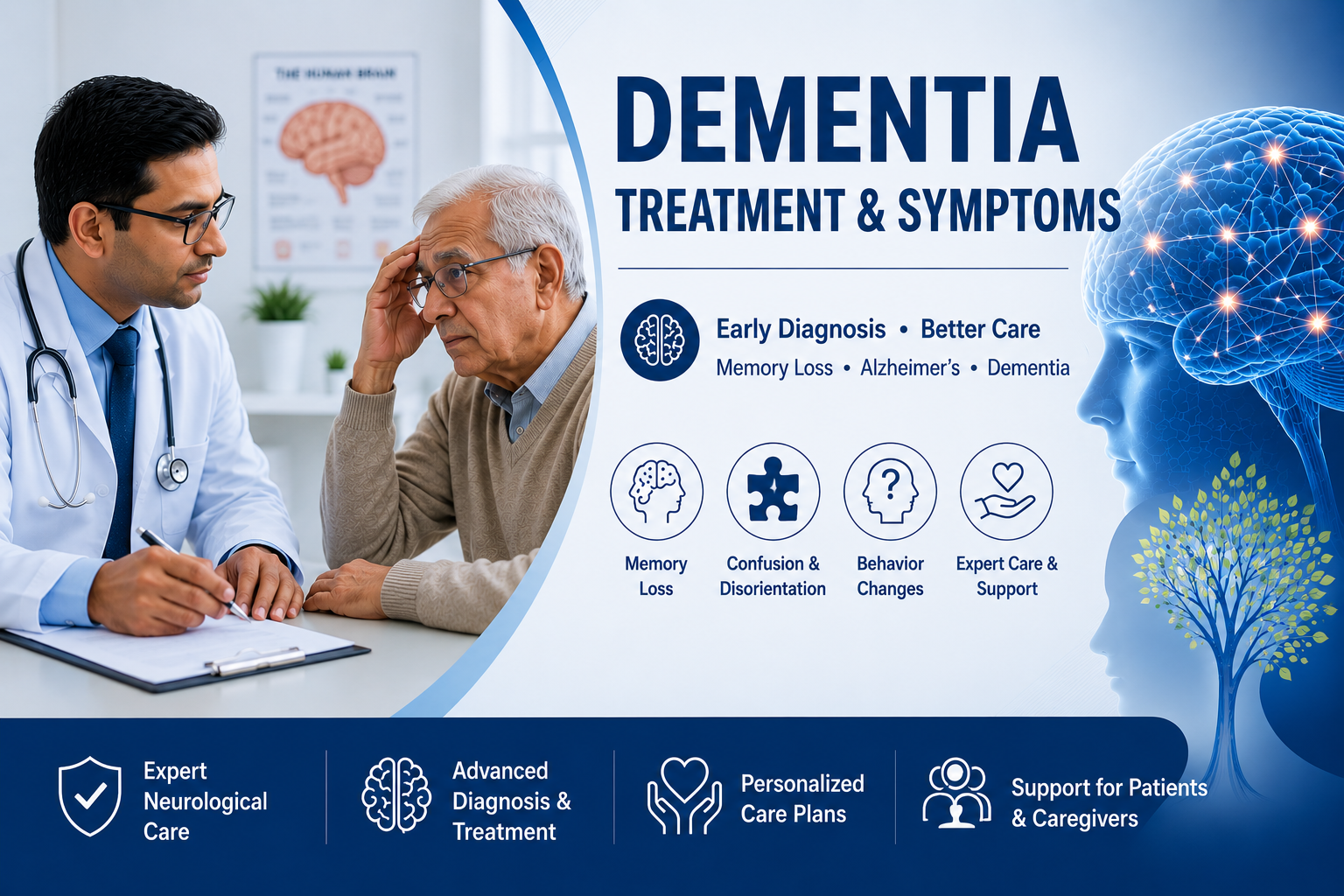
Dementia Treatment & Symptoms: Expert Care from the Top Dementia Specialist in Saket, Delhi
Dementia is a progressive neurological condition that affects memory, thinking, behavior, and the ability to perform everyday activities. It is one of the most common health concerns among older adults and can significantly impact both patients and their families. While occasional forgetfulness is a normal part of aging, persistent memory loss and cognitive decline may indicate dementia and require medical attention.
Early diagnosis and timely intervention can help manage symptoms, slow disease progression, and improve quality of life. If you are searching for the Top Dementia Specialist in Saket, Delhi or the Best Neurologist in Delhi Dr. Mukesh Kumar, understanding the symptoms, causes, and treatment options for dementia is the first step toward effective care.
What is Dementia?
Dementia is not a single disease but a group of symptoms associated with a decline in cognitive function. These symptoms interfere with a person’s ability to think, remember, communicate, and carry out daily activities independently.
The condition occurs when brain cells become damaged and can no longer communicate effectively. Different types of dementia affect different parts of the brain and may present varying symptoms.
Common forms of dementia include:
- Alzheimer’s Disease
- Vascular Dementia
- Lewy Body Dementia
- Frontotemporal Dementia
- Mixed Dementia
Among these, Alzheimer’s disease is the most common cause of dementia worldwide.
Common Symptoms of Dementia
Recognizing dementia symptoms early can lead to better treatment outcomes. Symptoms often develop gradually and worsen over time.
1. Memory Loss
One of the earliest signs of dementia is difficulty remembering recent conversations, appointments, or events. Patients may frequently repeat questions or misplace everyday items.
2. Difficulty Communicating
People with dementia may struggle to find the right words, follow conversations, or express themselves clearly.
3. Confusion and Disorientation
Individuals may lose track of time, forget familiar locations, or become confused about dates and events.
4. Poor Judgment and Decision-Making
Dementia can affect reasoning skills, making it difficult for patients to manage finances, medications, or daily responsibilities.
5. Changes in Mood and Personality
Anxiety, depression, irritability, social withdrawal, and personality changes are common symptoms associated with dementia.
6. Difficulty Performing Routine Tasks
Activities such as cooking, driving, shopping, or managing household chores may become increasingly challenging.
7. Loss of Problem-Solving Ability
Patients may find it difficult to plan, organize, or complete tasks that once seemed simple.
If these symptoms persist or worsen, consulting the Best Neurologist in Delhi Dr. Mukesh Kumar can help determine whether dementia or another neurological condition is responsible.
Causes of Dementia
Dementia develops due to damage to brain cells that affects communication between different regions of the brain.
Common causes include:
Alzheimer’s Disease
The most common cause of dementia, characterized by abnormal protein deposits in the brain that damage nerve cells.
Vascular Dementia
Results from reduced blood flow to the brain, often caused by stroke, high blood pressure, or cardiovascular disease.
Lewy Body Dementia
Caused by abnormal protein deposits called Lewy bodies that affect memory, movement, and behavior.
Frontotemporal Dementia
Occurs due to degeneration of nerve cells in the frontal and temporal lobes of the brain.
Other Conditions
Certain medical conditions may also contribute to cognitive decline, including:
- Parkinson’s Disease
- Brain injuries
- Brain tumors
- Infections
- Vitamin deficiencies
- Thyroid disorders
Risk Factors for Dementia
Several factors can increase the likelihood of developing dementia:
- Increasing age
- Family history of dementia
- High blood pressure
- Diabetes
- High cholesterol
- Smoking
- Obesity
- Physical inactivity
- Excessive alcohol consumption
- Previous stroke
- Cardiovascular disease
While some risk factors cannot be controlled, maintaining a healthy lifestyle can significantly reduce the risk of cognitive decline.
Importance of Early Diagnosis
Many families ignore early symptoms of dementia, assuming they are part of normal aging. However, early diagnosis provides several benefits:
- Better symptom management
- Access to treatment options
- Improved quality of life
- Future care planning
- Support for caregivers and family members
Consulting a Top Dementia Specialist in Saket at the first sign of memory problems can help identify the condition before significant brain damage occurs.
How Dementia is Diagnosed
A comprehensive evaluation is necessary to diagnose dementia accurately.
Medical History Assessment
The neurologist reviews symptoms, medical history, medications, and family history.
Neurological Examination
A detailed neurological assessment evaluates memory, coordination, balance, reflexes, and cognitive abilities.
Cognitive Testing
Memory and thinking skills are assessed through specialized cognitive and neuropsychological tests.
Brain Imaging
Advanced imaging helps identify structural changes in the brain.
Common tests include:
- MRI Scan
- CT Scan
- PET Scan
Blood Tests
Laboratory investigations help rule out conditions such as:
- Vitamin B12 deficiency
- Thyroid disorders
- Infections
- Metabolic abnormalities
The Best Neurologist in Delhi Dr. Mukesh Kumar may recommend a combination of these tests to determine the underlying cause of cognitive decline.
Dementia Treatment Options
Although there is currently no permanent cure for most types of dementia, several treatment options can help manage symptoms and improve daily functioning.
Cognitive Rehabilitation
Cognitive therapy helps patients maintain mental function through structured exercises and activities designed to stimulate memory and thinking skills.
Occupational Therapy
Occupational therapists help patients adapt to daily challenges and maintain independence for as long as possible.
Physical Activity
Regular exercise improves blood circulation to the brain and supports overall neurological health.
Nutritional Support
A balanced diet rich in:
- Fruits
- Vegetables
- Whole grains
- Healthy fats
- Lean proteins
can contribute to better brain health and overall well-being.
Emotional and Psychological Support
Many dementia patients experience depression, anxiety, or frustration. Counseling and support groups can help improve emotional health.
Why Choose the Top Dementia Specialist in Saket?
Managing dementia requires specialized neurological expertise and a personalized treatment approach.
Benefits of consulting a Top Dementia Specialist in Saket include:
- Accurate diagnosis
- Advanced neurological assessment
- Personalized treatment plans
- Ongoing monitoring
- Caregiver education and support
- Access to modern diagnostic technology
Specialized care can make a significant difference in maintaining quality of life and slowing disease progression.
Best Neurologist in Delhi Dr. Mukesh Kumar for Dementia Care
When it comes to diagnosing and treating dementia, choosing an experienced neurologist is essential. The Best Neurologist in Delhi Dr. Mukesh Kumar is known for his expertise in managing neurological disorders, including dementia, Alzheimer’s disease, Parkinson’s disease, stroke, and memory-related conditions.
With a patient-focused approach, Dr. Mukesh Kumar emphasizes early diagnosis, comprehensive evaluation, and evidence-based treatment strategies. Patients experiencing memory loss, confusion, behavioral changes, or cognitive decline can benefit from timely consultation and specialized neurological care.
Tips to Reduce the Risk of Dementia
While dementia cannot always be prevented, certain lifestyle changes may lower the risk:
Stay Physically Active
Engage in regular exercise such as walking, yoga, or swimming.
Keep Your Brain Active
Reading, puzzles, learning new skills, and social interaction help stimulate brain function.
Manage Chronic Diseases
Control conditions such as:
- Diabetes
- High blood pressure
- High cholesterol
Follow a Healthy Diet
A Mediterranean-style diet rich in fruits, vegetables, nuts, and healthy fats supports brain health.
Avoid Smoking and Excessive Alcohol
These habits can increase the risk of cognitive decline and vascular disease.
Maintain Social Connections
Regular social interaction helps support emotional and cognitive well-being.
When Should You See a Dementia Specialist?
Consult a neurologist if you or a loved one experiences:
- Persistent memory loss
- Frequent confusion
- Difficulty recognizing familiar people or places
- Problems managing daily tasks
- Personality changes
- Difficulty communicating
- Poor judgment or decision-making
Seeking help early from a Top Dementia Specialist in Saket can improve treatment outcomes and provide access to appropriate support services.
Dementia is a complex neurological condition that affects memory, thinking, behavior, and daily functioning. While there is no complete cure, early diagnosis and proper treatment can significantly improve quality of life and help patients maintain independence for longer periods.
Understanding the symptoms of dementia and seeking timely medical care is crucial for effective management. If you are looking for expert neurological care, consulting the Top Dementia Specialist in Saket and the Best Neurologist in Delhi Dr. Mukesh Kumar can provide access to advanced diagnostic services, personalized treatment plans, and comprehensive support for patients and caregivers.
Early intervention remains the key to managing dementia successfully and ensuring the best possible outcomes for patients and their families.
Book a consultation with Dr. Mukesh Kumar, a leading neurologist in Delhi with 25+ years of experience. As Director & Head of the Parkinson’s Disease Unit, Neurology, at Max Super Speciality Hospital, Saket, Delhi he specializes in providing comprehensive care for a wide range of neurological conditions.